01
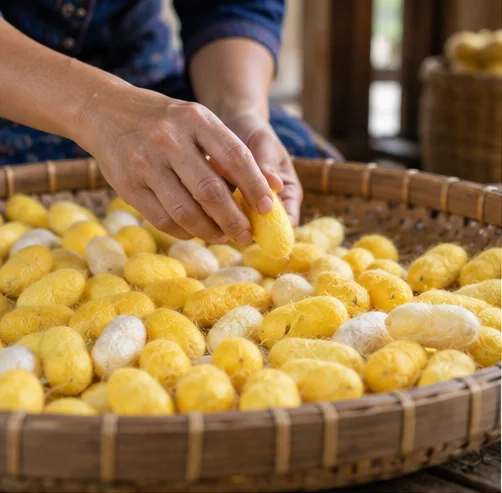
Select intact cocoons
Cocoons are sorted one by one for size, colour and integrity; damaged fibre can interrupt the thread later.
A time atlas · one continuous view
Before one finished cloth can exist, the motif is drawn and counted, silk is wound into even groups, bundles are tied by hand, colour is built in small batches, every thread is realigned, and the pattern is woven passage by passage.
Create silk that is even, continuous and strong enough for every later treatment.
Cocoons are sorted one by one for size, colour and integrity; damaged fibre can interrupt the thread later.
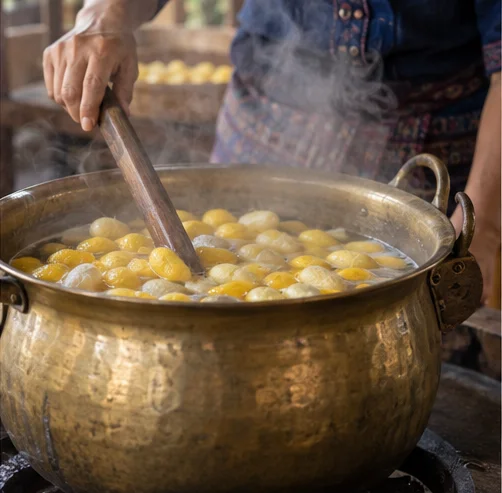
Controlled heat softens sericin so filaments release without losing their natural lustre.
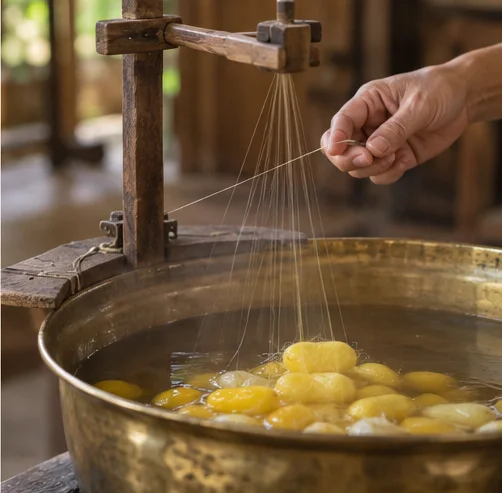
The end of each cocoon is found in warm water and several fine filaments are reeled together.
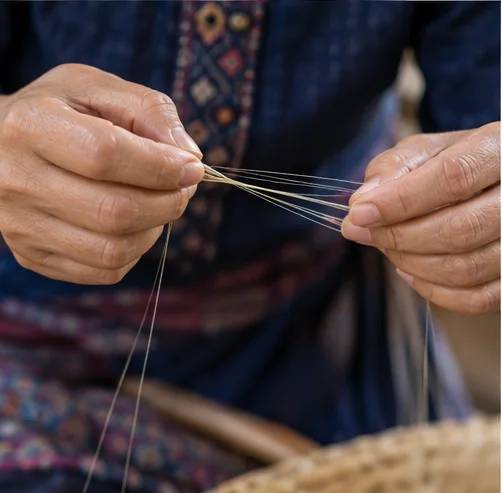
As one filament ends, another is joined: strong enough to hold, fine enough not to form a hard knot.
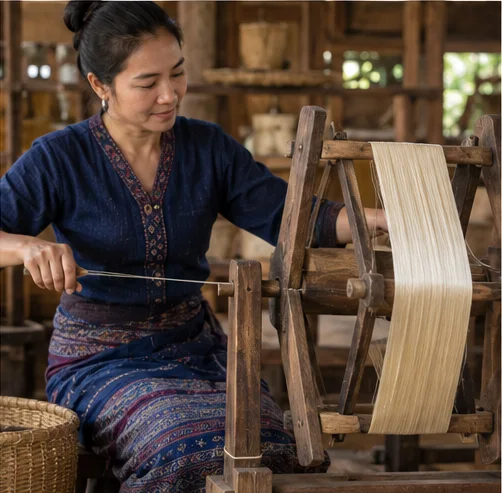
Silk is wound at a steady speed, controlling turns, length and tension for even later treatment.
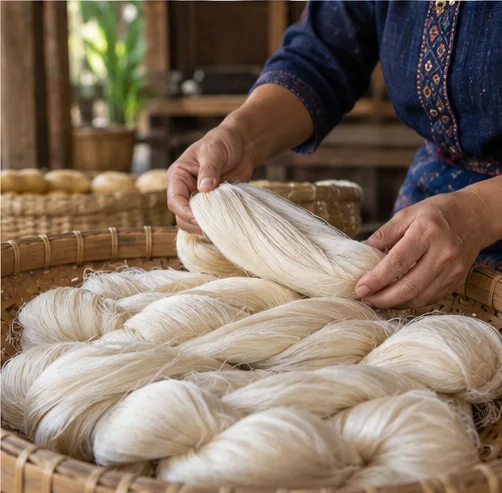
Each skein is checked for thickness, snags and breaks; uneven sections are prepared again.
The design becomes numbers before hands bind it bundle by bundle.
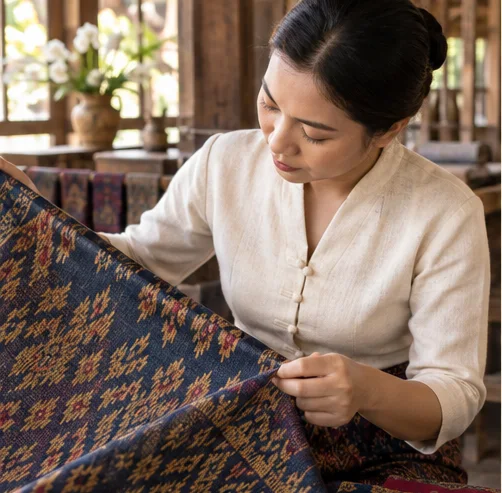
Diamonds, flora, borders and repeats are studied before deciding scale and placement.
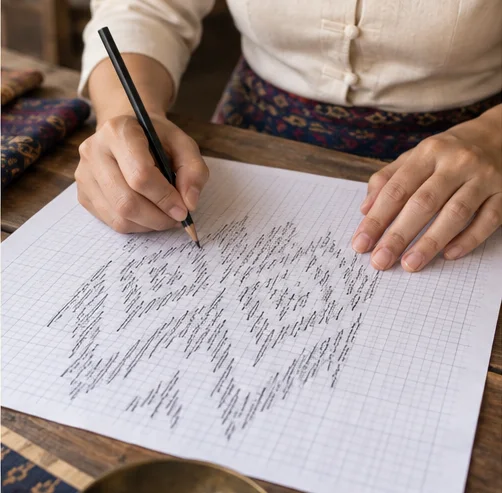
Curves become grid points, each one destined to correspond to a position on the silk.
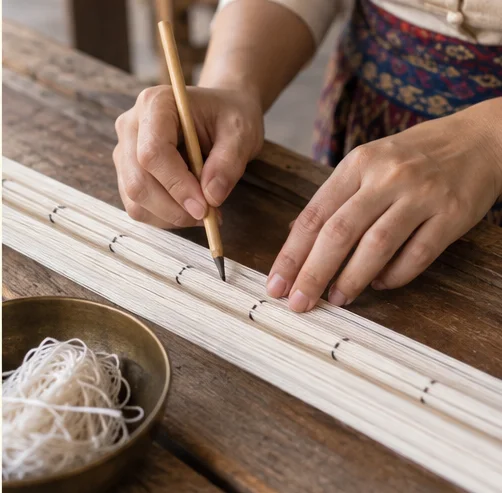
Width, repeats and colour boundaries determine how many threads enter each group and where binding starts.
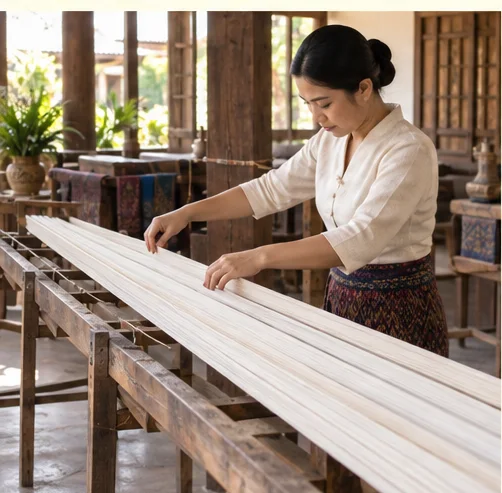
Silk is stretched across a long frame in order; unequal length or tension will accumulate into error.
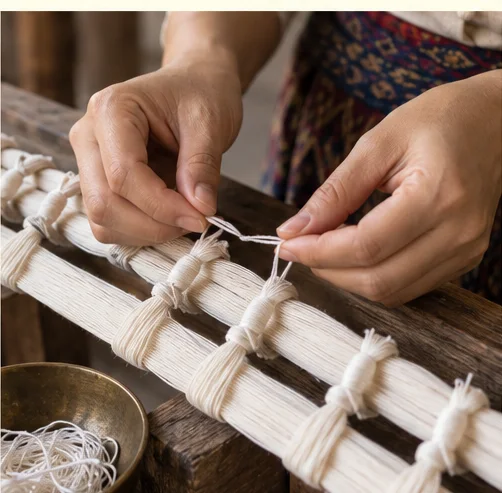
Tiny groups are isolated and tied at mapped coordinates; covered silk resists dye while exposed silk takes colour.
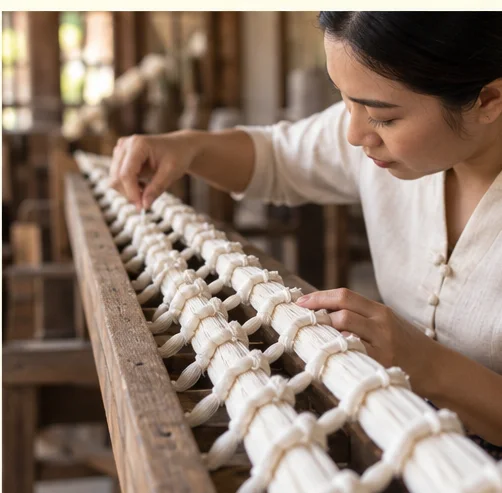
Every row is checked for missed, reversed, loose or tight ties—errors may appear only weeks later.
Each colour requires wetting, waiting, drying, opening and binding again.
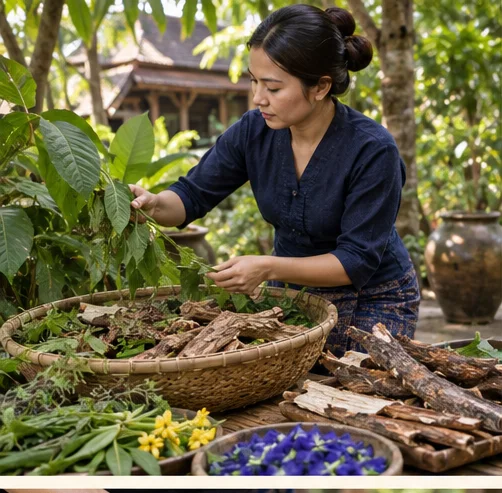
Workshop-confirmed leaves, bark or skins are selected, cleaned and weighed; origin affects colour.
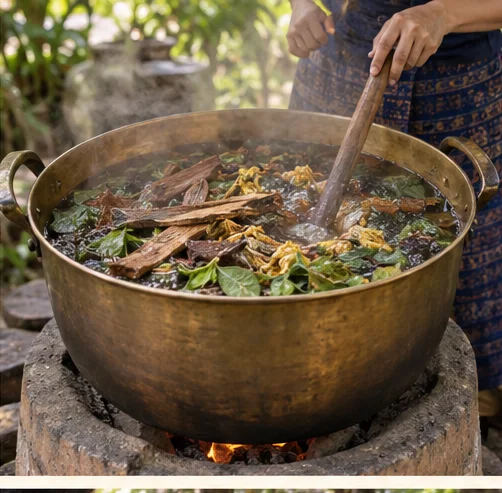
Botanicals are heated and filtered; temperature, pH and time shape depth and stability.
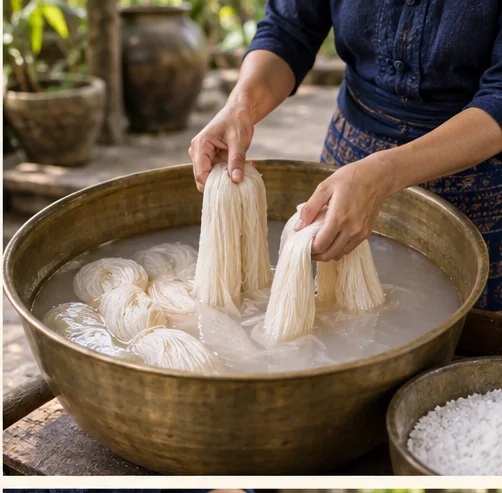
Skeins absorb water fully, then receive the workshop's mordant or pretreatment for even colour.
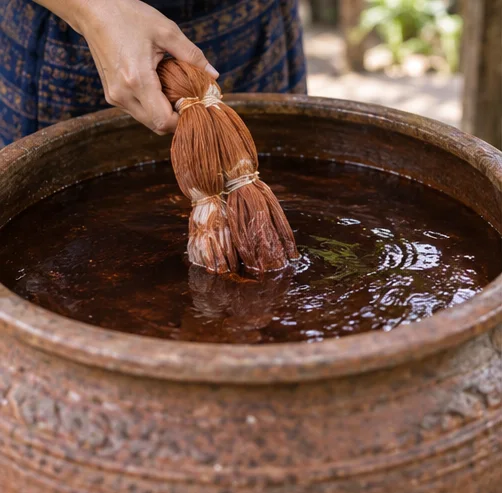
Silk is dipped, moved, pressed and rested repeatedly; colour enters the fibre layer by layer.
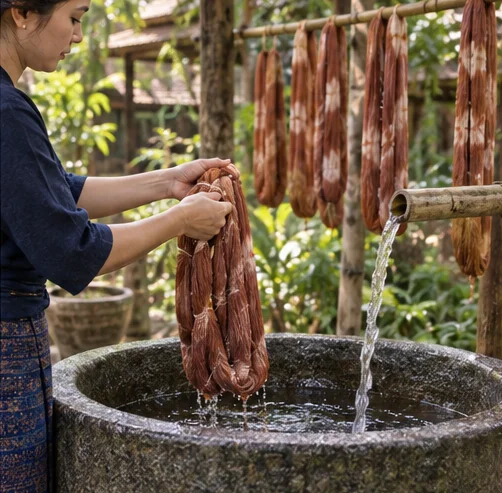
Loose dye is rinsed away and silk dries slowly in moving air; weather changes the wait.
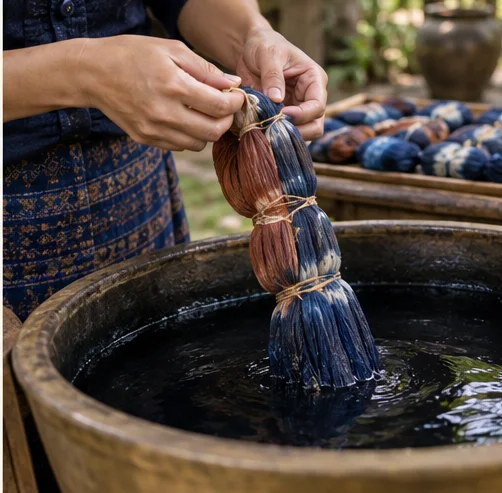
For later colours, selected ties are opened, new areas bound, and the dye-and-dry cycle begins again.
Scattered points of colour meet again, one passage at a time.
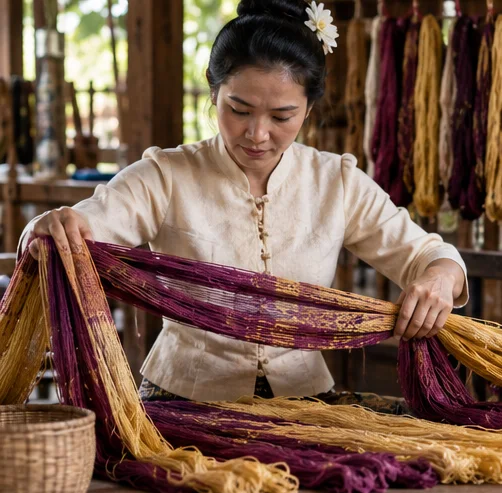
Bundles are opened and scattered colour segments returned to their mapped order, corrected at millimetre scale.
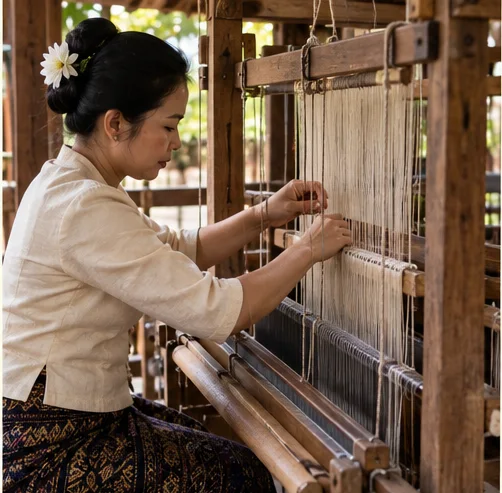
Warp ends pass through heddles and reed in order before the whole width is tensioned.
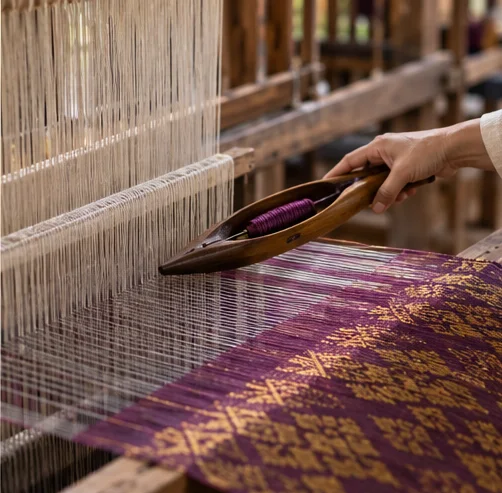
Feet lift the shed and hands pass the shuttle; one motion adds only a narrow line, repeated thousands of times.
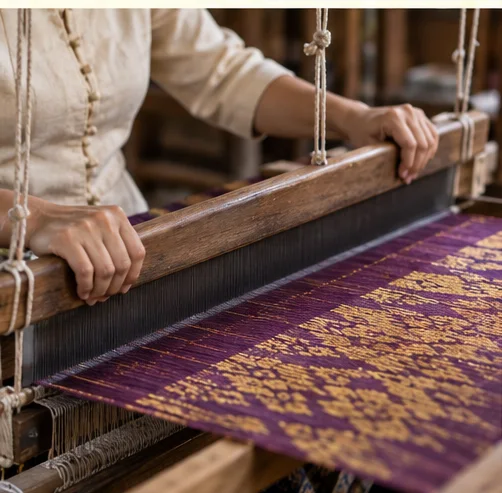
After each pass the weft is packed evenly; too loose leaves gaps, too tight distorts the cloth.
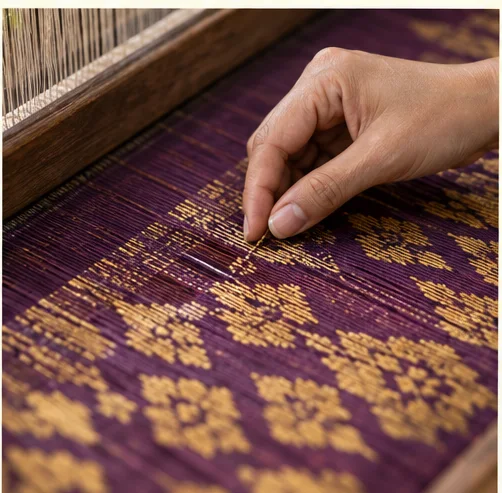
The maker pauses to nudge drifting colour segments back; the motif is corrected into existence, not automatic.
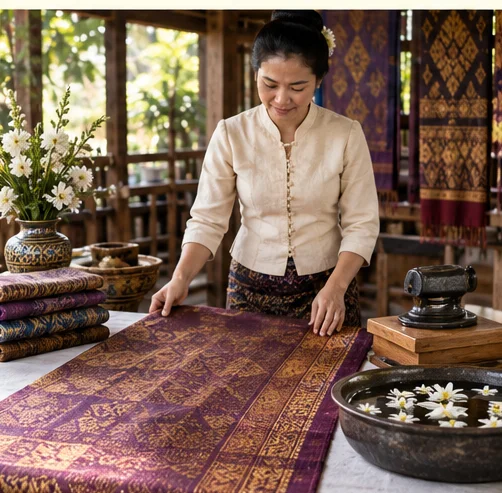
Off the loom, cloth is washed, shade-dried, pressed and checked for floats, colour, edges and final size.
You are not only buying silk. You are keeping the time held inside it.
Times illustrate a complex resist-dyed, handwoven process and vary with motif, colour layers, weather, width and workshop practice. The actual timeline and dye materials for each listed cloth are confirmed with its workshop.AI-assisted process illustration · not a named maker